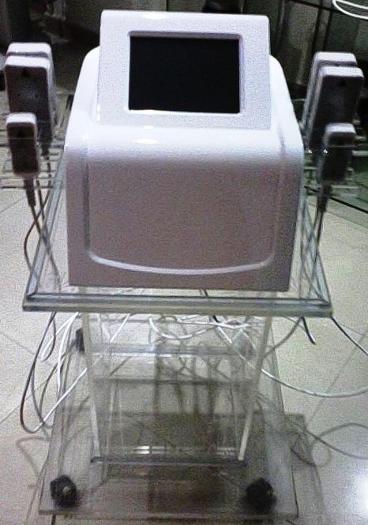
Physiotherapy services at SCM PHYSIOTHERAPY CLINIC
Physiotherapists are the people who leg up the frustrated humanity, they are the only beam of light for the patients, who have been dejected by all other means, They are the people, who bring smile on the gloomy faces of disappointed patients.
Sports Physiotherapy
At SCM Physiotherapy clinic we have a dedicated team of health and fitness professionals who are specialists in the treatment of sports injuries. All of our physiotherapists have extensive experience in the assessment and treatment of sports injuries and have worked with professional sports teams. This gives us the best possible understanding into your sport and fitness/injury issues at every level. Our knowledge of anatomy, biomechanics and physiology enables us to not only assess your specific injury but your overall posture, alignment and muscle balance. This is essential in the prevention of further injury and to optimise your performance as an athlete. Sports Injuries There are two main categories of sports injury;
Acute injuries, such as dislocations, muscle tears and ligament sprains.
Overuse injuries, such as stress fractures and tendonopathies.
Acute injuries are sudden onset in nature and are often caused by a direct blow or tackle or when the body is simply not able to cope with the demands placed upon it. Overuse injuries tend to be more gradual in their onset and can be due to a multiple of issues such as footwear, biomechanical abnormalities and training techniques. Overuse injuries are becoming increasingly prevelant as we place more load upon our musculoskeletal systems with modern training techniques and our increasingly sedentary occupations. In these instances the physiotherapist must undertake a thorough history and assessment to discover the underlying cause. Assessment and Treatment With both types of injury it is essential to receive a physiotherapy assessment and treatment as quickly as possible to prevent further problems and ensure the quickest possible recovery. Within the assessment we will take a thorough history and carry out various tests in order to give you a diagnosis and enable us to continue with the treatment plan. We may use video analysis equipment to assess your movement patterns and will involve other members of the team for their professional input. We also have excellent links with several orthopaedic consultants, each specialising in a particular field. This enables us, where necessary, to refer you for further investigation such as x-rays or an MRI scan so that an accurate diagnosis can be made as quickly as possible. Use of electrotherapy modalities within the initial inflammatory period will reduce the tissue trauma and decrease pain. In the next stage of treatment we aim to restore full movement, strength and proprioception, (the nerve- muscle connection). We can do this with a range of techniques such as joint and soft tissue mobilisation, manipulation, strapping/taping, stretching, acupuncture and specific exercise rehabilitation programmes.
We will also assess and treat any muscle imbalances so that you are able to perform to an even higher level, (see our leaflet on muscle balance and core stability).
SCM Physiotherapy Clinic
Dr.Vijay Guleria: 9818380883
Ante-Natal Physiotherapy
A number of factors contribute to muscle and joint problems during pregnancy. These include:
The release of the hormone relaxin from about 10 weeks gestation. This loosens ligaments through the body but especially around the pelvis.
An exageration ofthe lumbar iosdosis (curve) to compensate for the change in the bodies centre of gravity.
Weakening of the pelvic floor and lower abdominal area due to hormonal changes and muscles stretching.
Common complaints (which we can treat) include:
symprysis pubis dysfunction: symptoms may include pain in the pubic bone especially when walking or seperating the legs.
sacrolilliac joint dysfunction: pain around dimple joints at the back of the pelvis, buttocks and down the legs.
lower back pain: pain when walking or standing on one leg.
thoracic spine pain: This may present itself as general tightnedd, pain localised to the rib cage or pain when deep breathing.
Knee pain
What will be involved in the treatment?
This will depend on what the physio finds when assessing you however some of the following techniques may be used:
Education regarding posture and back care
Exercises to improve muscle control around your pelvis and spine
Education of the pevic floor
Mobilisation of the pelvis
Massage
Stretches
The use of a belt to help stabilise the pelvis
Please note: there are no Post-natal classes running at the moment
Post-natal Physiotherapy
Women commonly experience muscle and joint pain postnatally and the following are contributing factors:
Weakness of the lower abdominal and pfm in both vaginal and caesarian deliveries
Long periods spent sitting whilst feeding the baby can contribute to tightness in the upper body
The presence of the hormone relaxin in the weeks post
delivery and whilst breast feeding loosens ligaments which are then more
vunerable to
Unaccustomed lifting and bending over cots, car seats etc.
What do we treat?
Pelvic floor muscle weakness, prolapse and stress incontinence
Lower back pain
Thoracic spine pain
Neck and upper shoulder pain and stiffness
Tendanitis
Sacroiliac joint dysfuntion
What will be involved in the treatment?
For pelvic floor muscle weakness:
This may involve an internal examination to assess the strength of your muscles
The physiotherapist may use a special machine called a Myedin to assist with muscle contraction
Home exercises for the pelvic floor and lower abdominals will be given
Advice will also be given on how to cope with stress incontinence (leaking when coughing or sneezing).
Other conditions - treatment may include:
Advice on back care whilst feeding and lifting your baby
Advice on posture
Exercises to improve muscle control around the pelvis and spine
Mobilisations and streyches for stiff joints and the spine
massage
Electrotherapy
Post-fracture re-education
Fractures (broken bones) are treated by immobilising the broken bone (often in a plaster) for 6-8 weeks. If the broken bones are in many pieces or displaced metal plates, rods or screws may be inserted surgically to stabilise the area before plaster is applied.
When the leg or arm comes out of plaster, although the broken bones may have healed, often the joints nearby are stiff, the muscles tight or weak and there may be swelling. This makes it difficult to use the affected limb normally and may cause pain.
Why come to a physiotherapist?
Physiotherapy is often very effective at addressing these issues. Manual mobilisation techniques can help to get the stiff joints moving again.. Muscles that are tight can be manually released and stretched and strengthening exercises can be taught to restore strength in weak muscles. Manual soft tissue techniques can be used to resolve swelling and break down scar tissue. Very specific exercises may be used to treat balance difficulties if required.
How long would the treatment last?
The length of treatment is very dependent on the problems
present. Usually treatment is once or twice per week initially and then
decreases to less frequest sessions. Physio for all in
Back & Neck problems
At SCM one of the most common problems we encounter are clients presenting with back and/or neck pain, indeed more than 2 million people a year will visit their GP with a new episode of back pain (National Back Pain Association)
Back pain is one of the most disabling musculoskeletal conditions, from localised muscle spasm which can limit all movement in the back, to referred pain like “sciatica”. For information specifically about lower back pain please see the page on lower back pain.
Lower back pain affects many people at different times of their life.
Pain can arise suddenly from a traumatic injury such as lifting a heavy load awkwardly or come on gradually for no apparent reason. Back pain can also be hugely unpredictable so it is very difficult pinpoint the cause, however in most incidences poor posture is a considerable factor, (see posture section).
This is also true for neck pain, where occupational hazards such as laptop use, phone position and general poor work station ergonomics can cause stiffness in the joints and overuse of the soft tissue structures. These changes in the musculoskeletal systems of the neck can also cause headaches and refer pain into the arms.
Are you doing your pelvic floor exercises?
It is extremely important that you exercise these muscles correctly to regain muscle tone and strength after having a baby to prevent problems now and in later life.
WHAT ARE THE PELVIC FLOOR MUSCLES (PFM)
PFM are a sling of muscle running from your pubic bone at the front to your coccyx at the back. They form your perineum and give the support to your
bladder, bowel and uterus from below; allowing the passage for the urethra, anus and vagina.
In pregnancy there is an increase in pressure on this area due to the growth of your womb and of your baby. The hormonal changes that occur also cause a weakness of the muscles.
In a vaginal delivery it is PFM which are stretched, torn or cut (episiotomy)THE ROLE OF PFM
To support the pelvic organs, to prevent a prolapse which can occur after childbirth or in later life.
To control the flow of urine-to stop you leaking
To control wind and bowel motion-to prevent incontinence.
To enhance sexual enjoyment.
To give support to the growing baby , then guide its head during the delivery.
WHEN TO DO THE EXERCISES
It is important to start the exercises when you are pregnant to maintain as much strength in the muscles as possible, and to teach you how to feel the contraction so you know what you are doing postnatally when the area may feel numb, sore and out of control!
Antenatally you may go through good and bad stages of control of your continence. This can be due to the hormonal changes and also the position of the baby-it may be resting on your bladder giving you less control and making you want to wee more frequently.
Postnatally -contracting the muscles helps increase the blood supply to the area which helps with the healing and also with the swelling. The PFM exercises help to regain control and strength and the whole function and stability around the pelvic area.THE EXERCISES
There are 2 ways to exercise the muscles, so as to work the different muscle fibres .
Slowly tighten the muscles around the vagina and front passage, pulling up inside you as if trying to stop the flow of urine mid stream. Hold this contraction for as long as you can ( 4 seconds at first increasing to 10 seconds) then relax taking twice as long as you did to contract. Repeat this up to 10 times if possible.
2.Fast-Quickly and strongly contract the muscles holding for 1second, then relaxing for 2. Repeat 10 times. Do 5 sets of each a day
As a test only, you can try to stop the flow of urine mid stream, but do not do this as the exercise. The PFM are anti-gravity muscles, therefore working in any upright position, but are also under voluntary control. As with any muscle strengthening programme you should feel the muscles working, the feeling should be deep inside not just superficial. You may feel your lower abdominals working at the same time, this is fine, but you should be able to contract PFM without the buttocks, thighs or upper abdominals coming and without holding your breath. Breathe out whilst exercising.
Position to do the exercises in- Postnatally you should first do the exercises lying down and progress to sitting and standing up. Contract the muscles whilst you are moving, from sit to stand, lifting, going up the stairs and pushing the pushchair. Exercise regularly and frequently, progressing as you improve.
Coughing and sneezing -Sometimes you loose the natural reflex which should come in when coughing . this results in an increase in downward pressure from the abdominals not counteracted by the upward toning of PFM and you therefore leak. Try a ‘small’ cough whilst maintaining the PFM contraction. Increase the strength of the cough as you improve.
Sneezing is more difficult to control but try to contract quickly before you sneeze.
RETURNING TO SPORT
You should not return to aerobic(high impact-running, jumping, pounding) exercise until you gain control and do not leak on these movements. This may be at least 3 months, and longer if still breast feeding. Low impact exercise can be started earlier.If you continue to have problems. Contact your Doctor or a Physiotherapist specialising in Women’s Health. The Physiotherapist would do a vaginal examination to test whether you are doing the contractions correctly, then give you specific exercises for your problem. A biofeedback machine may be used to test the strength and stamina of the muscle or a machine for muscular stimulation. Physiotherapy will give you a better perception and awareness of the area helping the perineum to work with the whole body functionally.
Do not let the problem linger on. Many women do suffer from some sort of incontinence, which can be easily helped with the correct techniques and advice
Postural problems
Bad posture can lead to many problems....
The musculoskeletal system of the human body is a very finely tuned piece of mechanical engineering – similar to the engine of a car! Every structure has its set place and function and for normal movement all of these structures have to work perfectly together.
If one of these structures, typically the muscle, is over used then an imbalance between the structures will follow and this can lead to injury and pain, from the high performance athlete to the sedentary office worker.
The correct spinal alignment, pelvic and shoulder girdle stability is essential in allowing the body to cope with gravitational and other internal/external forces and the muscles to work in balance. From the base of the skull down to the pelvis the spine should form a gentle S shape, however in the modern world of “desk jobs”, computer and phone use and long distance travel, most people spend long periods of their day sitting in poor postures.
This changes the mobility of joints and effects the length, strength and timing of muscles and will eventually cause decreased movement, inflammation and pain.
It is essential therefore to ensure that you work to maintain a good posture.
Here are a few hints to ensure that you do this!
When standing, try to “tuck in” your bottom and gently tighten your abdominal muscles.
Do not stand with one hip out i.e., have your weight evenly distributed between your two feet.
Avoid low seats and seats that tip you backwards, try to always sit in an upright chair that supports your back.
Avoid being in one position for longer than 20 minutes.
Try not to cross your legs when sitting.
Ensure that computer, keyboard and mouse are in the right position and right height. If you spend long periods at your desk you should have an ergonomic assessment.
Don’t drive for long periods without a break.
Try to do 30 minutes of walking, cycling or swimming a day.
At SCM we can carry out an assessment of your posture/alignment and muscle function even if you don’t have pain, to ensure that you have a healthy body.
You give your car a regular MoT, look after your body the same way and prevent injury!
SCM PHYSIOTHERAPY Treatment Costs
Please note that first appointements are generally either 60 minutes or 45 minutes dependent on the specific nature of the appointment. This is due to the need to take full case history and patient details. Adults physiotherapy first appointment 300
Adults physiotherapy follow up appointment 250
Home visits 30 minutes from 800
Home visit 45 minutes from 1000
Children first appointment 250
Children follow up appointment 200
Baby/Child chest physiotherapy 500
Baby/Child chest physio home visit 750
Fitness rehabilitation 10 sessions 2000
Biomechanical assessment review consultation 300
Therapeutic Masssage
Sports, deep tissue or therapeutic massage 30 minutes 500
Sports, deep tissue, lymphatic drainage or therapeutic massage 45 minutes 600
Classes: YOGA - Maximum 4 in a class 400/class
Classes: Yoga - Private 1 to 1 800/hr
Most physiotherapy charges are covered by medical insurance companies.
Please note that full attendance fees willl be charged for non-attendance or cancellation within 24 hours of the appointment.